Date: 17/06/2025
Table Of Contents
After successfully giving birth, the real journey of motherhood is just beginning. This isn’t only a time for your body to recover, but also a period for learning to adapt to your new role: caring for yourself and your baby – from sleepless nights to unpredictable emotional changes.
To avoid feeling overwhelmed, you need a clear plan and a good understanding of what’s truly important after birth. This article will give you a clear guide on what to do after birth, covering health, emotional well-being, and baby care, so each day can feel more stable and a bit easier.
Postpartum Care: A Big Step for a Mom’s Health and Spirit
After having a baby, your body goes through some huge changes.
It’s not just about healing from childbirth, you might also find yourself dealing with temporary health setbacks, shifting hormones, or other complications.
Taking good care of yourself right now is a big part of what to do after birth because it helps you recover more quickly and can also support a steady milk supply if you’re breastfeeding.
But it’s not just about your physical health. Postpartum care is also really important for your emotional well-being. When you focus on this, you’ll build a stronger mental foundation to navigate your new role as a mom. This means finding ways to look after your little one while also making sure you’re looking after yourself.
Good all-around care during this time does more than just help prevent health issues down the road; it makes your daily life better as you begin this new journey of motherhood.
So, keep these ideas in mind as you plan what to do after birth.
What to Do After Birth: Your Physical Recovery is a Top Priority!
Get Plenty of Rest to Rebuild Your Strength
Giving birth takes a huge amount of energy. Afterwards, most women feel completely exhausted. Getting enough rest, especially in the first few weeks, is so important for both your physical and mental recovery. This is a fundamental part of what to do after birth.
You should try to sleep whenever you can, especially when your baby sleeps. This helps reduce long-lasting tiredness. Aim to truly rest for at least the first 2 to 4 weeks after birth, and try not to take on too many baby care tasks by yourself.
Don’t hesitate to ask family for help so your body can heal better. Ongoing lack of sleep and stress can affect your hormones and even your milk supply.

Enough sleep helps your body feel energized, improves blood flow, and supports your mental healing.
Light Exercises for Recovery
Moving in the right way after birth can boost your circulation, help your body clear out lochia (postpartum discharge), and get your strength back faster. If you had a vaginal birth without complications, you might be able to start walking gently about 6 hours later, if your doctor says it’s okay.
Start with light activities like walking around your room or doing simple foot and ankle movements in bed. Kegel exercises are especially good for strengthening your pelvic floor muscles. These muscles go through a lot during pregnancy and birth. Doing Kegels regularly every day will support your bladder and uterus function. Considering these exercises is a good addition to your understanding of what to do after birth.
Definitely avoid lifting anything heavy, doing intense exercise, or heavy chores, especially if your C-section incision or any perineal stitches haven’t healed.
If you had a C-section, you should wait at least 6 to 8 weeks and get your doctor’s approval before starting any gentle movement. Always listen to your body. If you feel any pain or discomfort, stop and rest.
Eating Well and Staying Hydrated
Good nutrition after birth not only helps your body recover but also directly affects the quality of your milk.
Every day, you should aim to drink about 2 to 3 liters of water to ensure a stable milk supply, because breast milk is more than 90% water. Knowing how to nourish your body is a key part of what to do after birth.
Your meals should be varied and include all four food groups. Focus on green vegetables, fresh fruits, whole grains, and protein from fish, lean meat, eggs, and dairy. In the first few days after birth, your digestive system might still be sensitive, so choose soft, easily digestible foods like porridge or soup. If you’ve had a C-section, you’ll likely need to avoid food for about the first 6 hours, then start with liquids.
Try to avoid fried, spicy, or unpasteurized foods, as well as anything raw or fermented. It’s also not a good idea to be overly restrictive with your diet, as this can leave your body lacking important nutrients.
Eating healthy like this helps you recover quickly, aids digestion, and helps prevent constipation, which many moms experience. Understanding good nutrition is a big part of knowing what to do after birth.
Proper Breast Care and Keeping Up Your Milk Supply
Breast milk is the perfect food for newborns, and the colostrum in the first few hours after birth is especially valuable. Starting to breastfeed early and correctly not only helps boost your baby’s immunity but also helps your uterus contract and return to its normal size more quickly.
You should let your baby breastfeed often, without strictly timing feeds, and offer both breasts to encourage even milk production. Keep your breast area clean by washing with warm water before and after feeding. If you experience cracked nipples, you can apply a little breast milk to the area or use a nipple cream made for new moms.
If your breasts feel full or tender, you can gently massage them or apply a warm compress to ease discomfort and help prevent blocked ducts. Staying relaxed, getting enough sleep, and drinking plenty of water will also help maintain your milk supply. If needed, you can use a breast pump to ensure your breasts don’t become overly full. This is particularly helpful if you’re returning to work or if your baby doesn’t empty the breast completely.
These are all practical tips for what to do after birth if you choose to breastfeed.
Postpartum Wound Care (Vaginal or C-Section Birth)
Proper wound care is a very important part of what to do after birth to help you heal well.
- If you had a vaginal birth and have perineal stitches, keep the area clean and dry. You can wash it with warm water or a mild antiseptic solution recommended by your doctor. Afterwards, gently pat the area dry with a soft towel. Try not to rub it hard.
- If you had a C-section, make sure to have your incision dressing changed according to your doctor’s schedule. Try to keep the incision site dry for the first few days. Also, limit strenuous movements, avoid bending over suddenly, and don’t carry heavy items, as these activities can affect your wound’s healing.
You can use a cold pack on your perineal area for the first few days to help with pain. It’s important to watch for any unusual signs like swelling, redness, increasing pain, discharge, or a fever. If you notice any of these, contact your doctor right away for advice and treatment. Being aware of these warning signs is a key aspect of knowing what to do after birth for a safe recovery.
Looking After Your Mental Health: Navigating Emotional Challenges
Understanding Emotional Changes After Birth
After giving birth, many women experience noticeable emotional shifts, often called the “Baby Blues.”
This is very common. It usually starts in the first few days after birth and doesn’t last longer than about two weeks. Some common signs include mood swings, feeling easily irritated, having trouble sleeping, or feeling anxious or uneasy.
The main causes are hormonal changes in your body, combined with lack of sleep and the pressures of starting to care for a new baby. It’s important for moms to understand that this is a temporary reaction. It is not a sign of weakness or something abnormal.
Postpartum Depression: Spotting it Early So You Can Get Help
While the “Baby Blues” usually go away on their own, postpartum depression (PPD) is more serious and you’ll need to see a doctor for it.
If those “Baby Blues” feelings last longer than two weeks, or if you also feel things like constantly guilty, worthless, lose interest in things you used to enjoy (even taking care of your baby), pull away from family and friends, or have scary thoughts about hurting yourself or your baby, these could be signs of postpartum depression.
PPD can start anytime in the first year after birth and sometimes it just looks like being really tired. That’s why it’s important for moms and their families to watch out for any unusual signs that stick around.
Reaching out to your doctor or a mental health professional as soon as you think something might be wrong can help you get diagnosed early and get the right treatment. Knowing when and how to ask for help is a really important part of looking after your mental health after birth. This can help you feel better faster and make sure your baby is safe and developing well.
It’s a good idea for moms and families to watch for and notice early signs of depression so you can get help quickly.
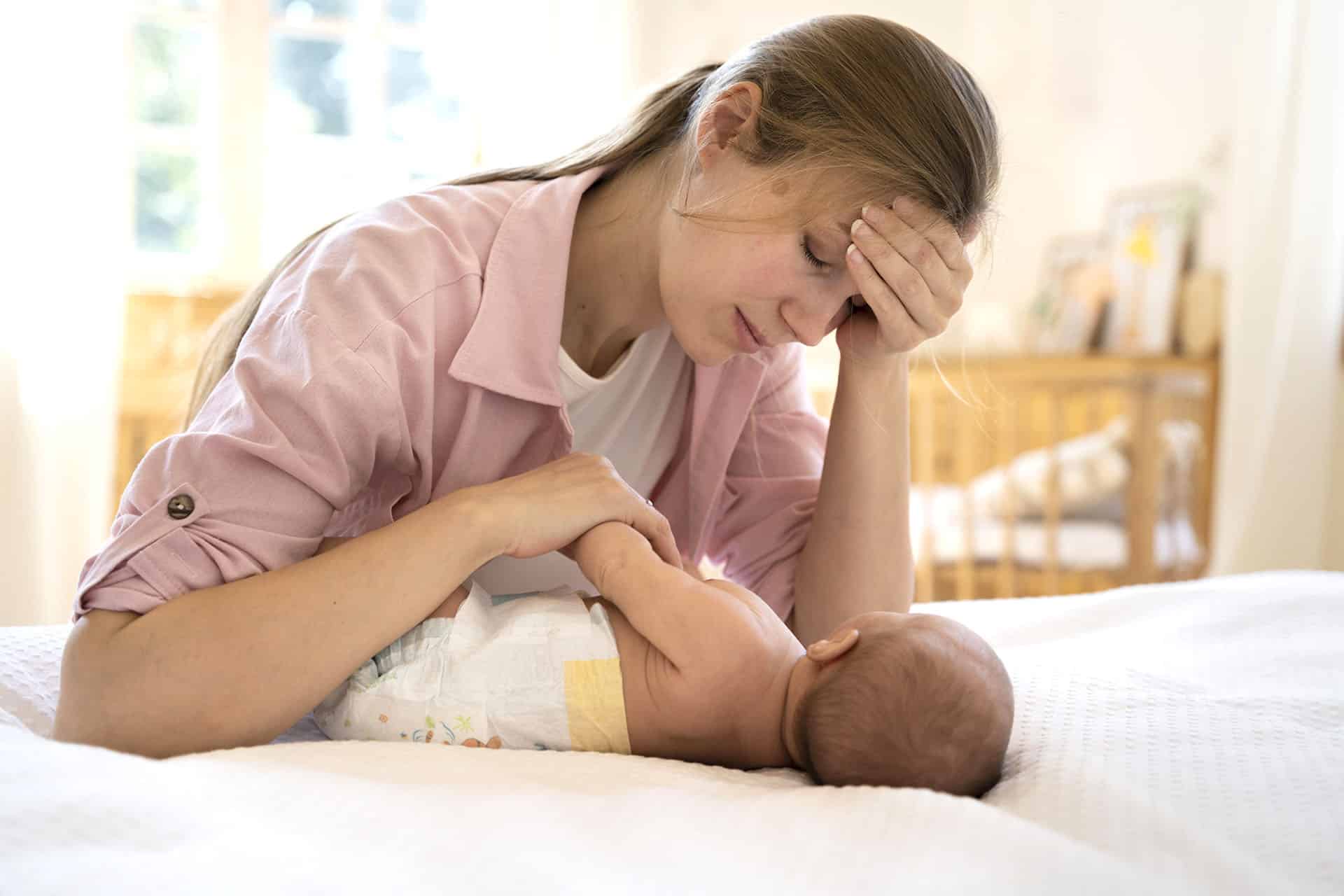
Moms and families should monitor for and recognize early signs of depression to get help promptly.
Family Support: A Big Help for Your Mood
Besides getting medical help, having support from your family is really important for your mental well-being after birth. Just talking honestly with your partner, parents, or other family members can help you feel understood and less alone.
Joining support groups for new moms, either online or in person, can also be really helpful to connect with other people going through the same thing. Hearing advice and shared stories from other mothers can help you feel more confident as you become a mom. Finding this kind of connection is a good thing to think about for your overall well-being after having a baby.
Personal Hygiene and Health Monitoring After Birth
Keeping Clean and Caring for Down There
Keeping yourself clean after having a baby is really important to avoid infections and help your body heal. You can take showers or baths with warm water in a room that’s not drafty. Try not to soak in the tub for too long, and make sure to dry yourself well, and dry your hair right after.
- If you had a vaginal birth, you can usually shower or bathe after about 3 to 5 days.
- If you had a C-section, you’ll probably need to wait a little longer, maybe around 7 to 10 days, or just follow the specific instructions your doctor gives you.
The old idea about not showering or washing your hair for a whole month isn’t necessary. Actually, not keeping yourself clean can make you more likely to get an infection.
For your private area, wash gently with clean, warm water, always wiping from front to back to keep germs from your bottom from getting into your vagina. Change your pads every few hours, or sooner if they feel wet. Don’t use tampons or douches after giving birth, as they can increase the risk of infection. This is especially important if you have stitches, as being clean helps the area heal better.
Keeping Track of Your Bleeding (Lochia) and How You’re Doing
The bleeding you have after birth, called lochia, is normal. It’s how your body gets rid of extra blood and tissue from your uterus. Paying attention to the color, smell, and how much bleeding there is can help you see how your recovery is going:
- First week: The bleeding is usually dark red and can be pretty heavy.
- Around day 4 to 10: It usually changes to a lighter pink or brownish color, and there’s less of it.
- Later on: It might turn whitish or light yellow and just be a little bit. This can last for a few weeks.
If your bleeding starts to smell bad, turns a greenish color, or if you suddenly start having bright red bleeding again after it has slowed down, these could be signs of an infection or another problem after birth. If this happens, you should call your doctor right away to get checked and treated. Keeping an eye on this is an important part of knowing what to do after you have your baby.
Things to Be Gentle With After Giving Birth for a Smooth Recovery
Take it Easy with Heavy Activity
While you’re getting back on your feet after having a baby, your body is still recovering, and any stitches you might have (from a C-section or tears) are still healing. So, it’s a good idea to avoid really hard physical stuff like lifting heavy things, bending down low, or reaching way up high. These kinds of movements can put pressure on your tummy and pelvic area and might make your healing take longer.
Also, holding off on intense workouts for a little while is a good idea. They can make you super tired, drain your energy, and just aren’t the best for you right now.
Here’s a more natural way to say that:
Things to Be Gentle With After Giving Birth for a Smooth Recovery
Take it Easy with Heavy Activity
While you’re getting back on your feet after having a baby, your body is still recovering, and any stitches you might have (from a C-section or tears) are still healing. So, it’s a good idea to avoid really hard physical stuff like lifting heavy things, bending down low, or reaching way up high. These kinds of movements can put pressure on your tummy and pelvic area and might make your healing take longer.
Also, holding off on intense workouts for a little while is a good idea. They can make you super tired, drain your energy, and just aren’t the best for you right now.
Foods to Watch Out For
Paying attention to what you eat after birth can really help you recover and make sure your breast milk is good for your baby. Try to avoid really spicy foods, things with a lot of strong spices, and foods that are very greasy or hard to digest. It’s also wise to go easy on raw, undercooked, or fermented foods (like pickles or some fish sauces) and very cold foods, especially at first. Your tummy might still be a bit sensitive, and these can cause problems. Eating too much salt isn’t great either, as it can make you hold onto water and might raise your blood pressure.
And definitely, steer clear of alcohol, beer, coffee, strong tea, and other things that give you a big boost. These not only affect your health (like making high blood pressure more likely) but can also get into your breast milk and not be good for your baby’s growth, especially their sleep and how well they take in nutrients.

It’s best for moms to choose healthy foods that are easy for the body to take in and help speed up recovery.
Being Careful with Medicines and Supplements
If you’re breastfeeding, don’t take any medicines or supplements on your own without checking with your doctor first. Lots of medicines can go into your breast milk and might cause problems for your baby.
Even with common over-the-counter medicines, it’s always best to get advice from a doctor to make sure it’s safe for both you and your little one. This is an important part of looking after your baby after they’re born.
Getting Back to Intimacy: No Need to Rush
Usually, it’s recommended that couples wait at least 4 to 6 weeks after the baby arrives before having sex again. Sometimes it might need to be longer if your body hasn’t fully healed yet.
Starting too soon can cause pain, bleeding, and even increase the chance of getting an infection. More importantly, a mom should only be intimate again when she truly feels ready, both physically and emotionally. Knowing this timing is also part of understanding what to do after birth and respecting your body’s recovery.
Basic Care for Your Newborn
Right from birth, newborns need special care, and you, the mom, are at the heart of this journey. Understanding and correctly following basic care steps will help your baby grow healthy and strong. This is a big part of what to do after birth as you begin life with your new baby.
Feeding with Breast Milk
For the first six months, breast milk is the absolute best food for your baby. It has everything they need to grow, plus it’s packed with natural protectors that help keep them from getting sick. Feeding your baby whenever they’re hungry and making sure they’re latching well helps them grow both in their body and their mind from these very first days.
Keeping Them Cozy and Warm
Newborns can’t control their own temperature very well yet, so try to keep the room a comfortable 26 to 27°C (around 79-81°F). Dress your baby in enough layers to stay warm, and use little mittens, booties, and a hat if you need to. Try not to put your baby in places where there’s a draft or where the temperature changes quickly.
Caring for the Umbilical Cord
You’ll need to clean the little stump of the umbilical cord every day, following the directions your doctor or nurse gave you. It’s important to keep it dry and open to the air. Don’t cover it with a tight bandage or put anything like traditional medicines on it. Your doctor might suggest gently wiping around the base with 70% alcohol. Usually, the stump will just dry up and fall off on its own in about a week or two.
Bath Time
Giving your baby a bath every day helps them stay clean and feel good. Use water that feels warm, around 37°C (about 98.6°F). Make sure the room you’re bathing them in isn’t drafty, and keep the bath short. After, gently dry them off and wrap them up quickly to keep them warm. Knowing these little things really helps as you figure out what to do after your baby arrives.
Watching for Any Unusual Signs in Your Baby
As a mom, you’ll need to observe your baby’s health every day. Some signs to look out for include:
- A fever (temperature above 37.5 degrees Celsius) or if your baby feels cold (below 36 degrees Celsius).
- If your baby is feeding less or refusing to feed.
- If jaundice (yellow skin) spreads or lasts a long time.
- If your baby is vomiting a lot or has a swollen tummy.
- If the umbilical cord area looks red, has a bad smell, or is oozing pus.
If you see any of these signs, you should take your baby to a healthcare facility to be checked and get help quickly. Knowing when to seek medical advice is a really important part of what to do after birth for your baby’s well-being.
Recognizing Warning Signs After Birth: When Should You Call the Doctor?
After having a baby, it’s really important for new moms to take it easy and heal, both physically and emotionally. But, if you notice any of these unusual signs, don’t wait to get help. You should go to a clinic or hospital right away:
- A high fever (over 38°C), perhaps with chills or severe tiredness.
- Lochia (discharge) with a bad smell, strange color (green/yellow), or if heavy, bright red bleeding returns (soaking a pad in an hour).
- Stitches or C-section wounds that are swollen, red, painful, or have pus.
- Constant, severe lower belly pain that doesn’t ease.
- Very full, red, painful breasts, or a hard lump, possibly with fever (could be mastitis).
- Painful or frequent urination, cloudy/bloody urine, with back pain.
- A lasting headache, dizziness, or blurred vision not improving with rest.
- Swelling, redness, or pain in one leg, especially the calf or thigh.
Taking Care of Yourself as You Recover
Everyone recovers differently after giving birth. Here are some simple ways to look after yourself and know what to do to feel better:
- Listen to your body. Rest when you’re tired and don’t feel like you have to rush back to doing everything.
- Eat good, healthy foods that are easy to digest – this is important for you and your baby if you’re breastfeeding.
- Try to stay positive, talk about how you’re feeling, and let someone know if you’re stressed or feeling overwhelmed.
- Let friends and family help you with the baby, meals, or anything you need for your health.
Taking good care of yourself after having a baby not only helps you heal faster but also helps you get ready for all the wonderful things about being a mom. If anything worries you, trust what you feel and call your doctor for support.
Remember, you don’t have to do this alone! Looking after yourself well is how you stay healthy and give your baby the best start.